Should I Give a Recorded Statement to the Other Driver's Insurance Company After a West Virginia Car Accident?
Should I Give a Recorded Statement to the Other Driver's Insurance Company After a West Virginia Car Accident?
By Stapleton Law Offices
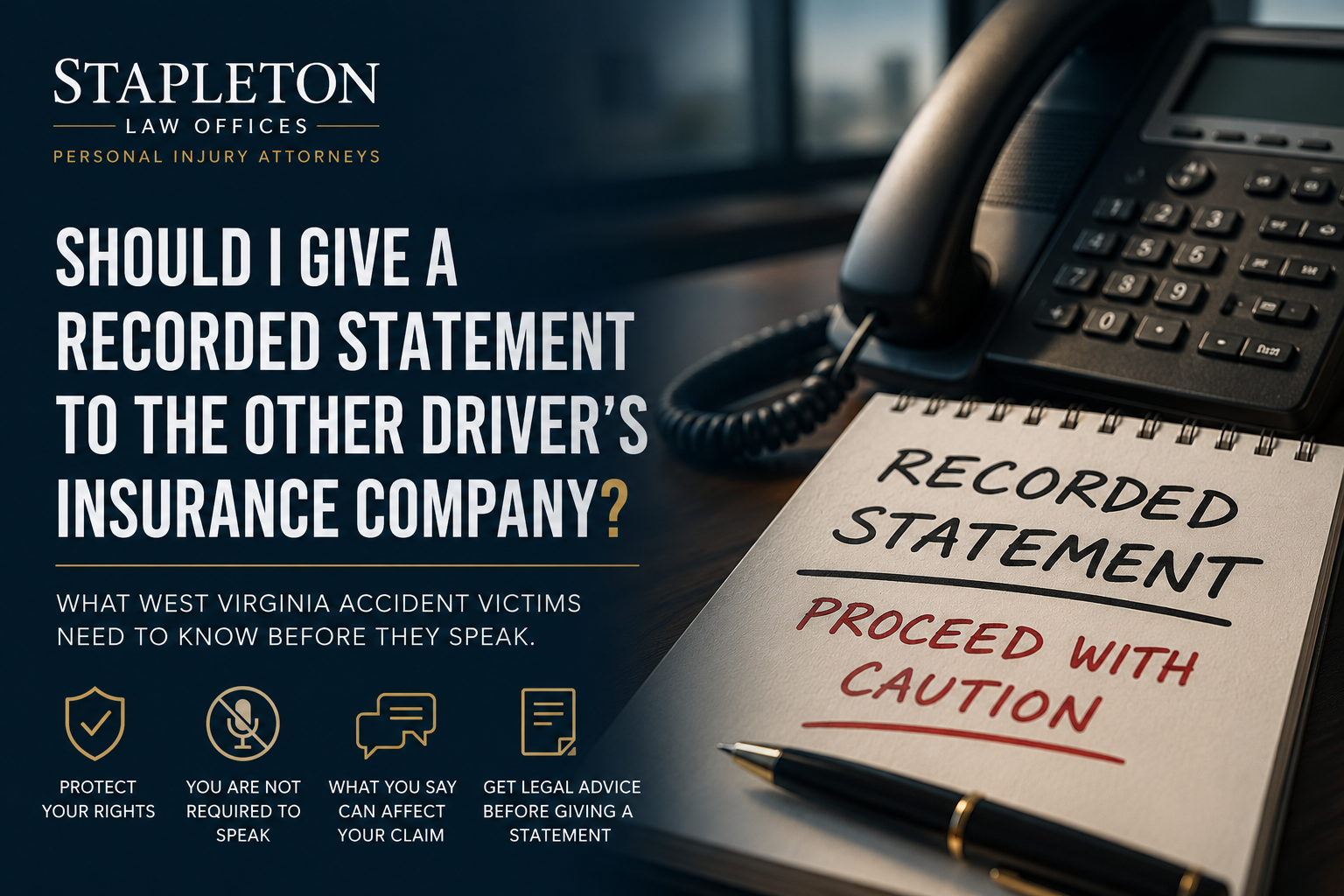
Short answer, absolutely not. After a car accident, it is common to receive a call from the other driver's insurance company. Often, the adjuster will ask for a recorded statement about how the crash occurred and the injuries you sustained. Many people assume they are required to provide a recorded statement. In most situations, that assumption is incorrect. Before speaking with an insurance adjuster, it is important to understand why recorded statements are requested and how they may affect your claim.
What Is a Recorded Statement?
A recorded statement is a formal interview conducted by an insurance adjuster. The adjuster may ask questions about:
- How the accident occurred
- Weather and road conditions
- Vehicle speeds
- Prior injuries
- Medical treatment
- Employment information
- Activities following the crash
The statement is typically recorded and preserved as part of the insurance company's claim file.
Am I Required to Give a Recorded Statement?
In most third-party claims (which is a claim another driver's insurance company), injured victims are generally not legally required to provide the other person's insurance company a recorded statement. The insurance company may request one, but that does not necessarily mean you must participate. The situation may be different if you are dealing with your own insurance company under certain policy provisions. That will depend on the specific terms of your own auto insurance policy.
Why Does the Insurance Company Want a Recorded Statement?
Insurance companies gather information for several reasons. Some questions may be designed to investigate liability and damages. Others may help identify inconsistencies that can later be used to challenge a claim. Adjusters are trained to evaluate claims and look for information that may reduce the amount the company pays.
Common Questions That Can Create Problems:
"How Are You Feeling Today?"
This question may seem harmless. However, many people respond with phrases such as "I'm fine" or "I'm doing okay" even when they are experiencing significant pain. Later, the insurance company may point to those statements during negotiations.
"Have You Ever Had Similar Injuries Before?"
Many people cannot accurately recall years of medical history during a phone call. An incomplete answer may later be portrayed as misleading if prior records reveal similar symptoms.
"What Do You Think Caused the Accident?"
Accident victims sometimes speculate about events they did not fully observe. Speculation can create unnecessary disputes regarding liability.
Why Timing Matters
Many recorded statement requests occur shortly after an accident. At that point:
- Medical treatment may be ongoing.
- Injuries may not be fully diagnosed.
- Diagnostic testing may not be complete.
- Long-term limitations may be unknown.
Providing definitive answers too early can create issues later if circumstances change.
Common Mistakes Accident Victims Make
Guessing Instead of Stating Facts
If you do not know the answer to a question, it is often better to say so than to speculate.
Minimizing Injuries
Many people downplay symptoms because they hope to recover quickly. Unfortunately, insurance companies may later rely on those statements.
Providing Information Beyond the Question Asked
Long explanations often create opportunities for misunderstandings.
What Should You Do If an Adjuster Calls?
Remain polite and professional. Obtain the adjuster's name, company, claim number, and contact information. Avoid feeling pressured to provide immediate answers before you fully understand your rights and the status of your injuries.
Frequently Asked Questions
Will refusing a recorded statement automatically hurt my claim?
Not necessarily. Every claim is different, but declining a recorded statement does not automatically prevent recovery.
Can a recorded statement be used against me later?
Statements made during a recorded interview may become part of the insurance company's evaluation of the claim.
What if I already gave a recorded statement?
That does not mean your claim is over. Additional evidence, medical records, and witness testimony may still support your case.
How Stapleton Law Offices Can Help
Insurance claims often involve more than simply reporting an accident. Understanding how recorded statements, medical documentation, and liability investigations affect a claim can make a significant difference in the outcome. The experienced team at Stapleton Law Offices helps injured people in the Huntington and Tri-State areas pursue compensation after serious car wrecks and other personal injury accidents. Contact Stapleton Law to schedule a free consultation with knowledgeable car accident injury attorneys and personal injury lawyers. Give us a call at (304) 529-1130 or email Contact@Stapleton-Law.com today!