Personal Injury Law in West Virginia: What You Need to Know About Car Accidents
7016273264 • May 3, 2023
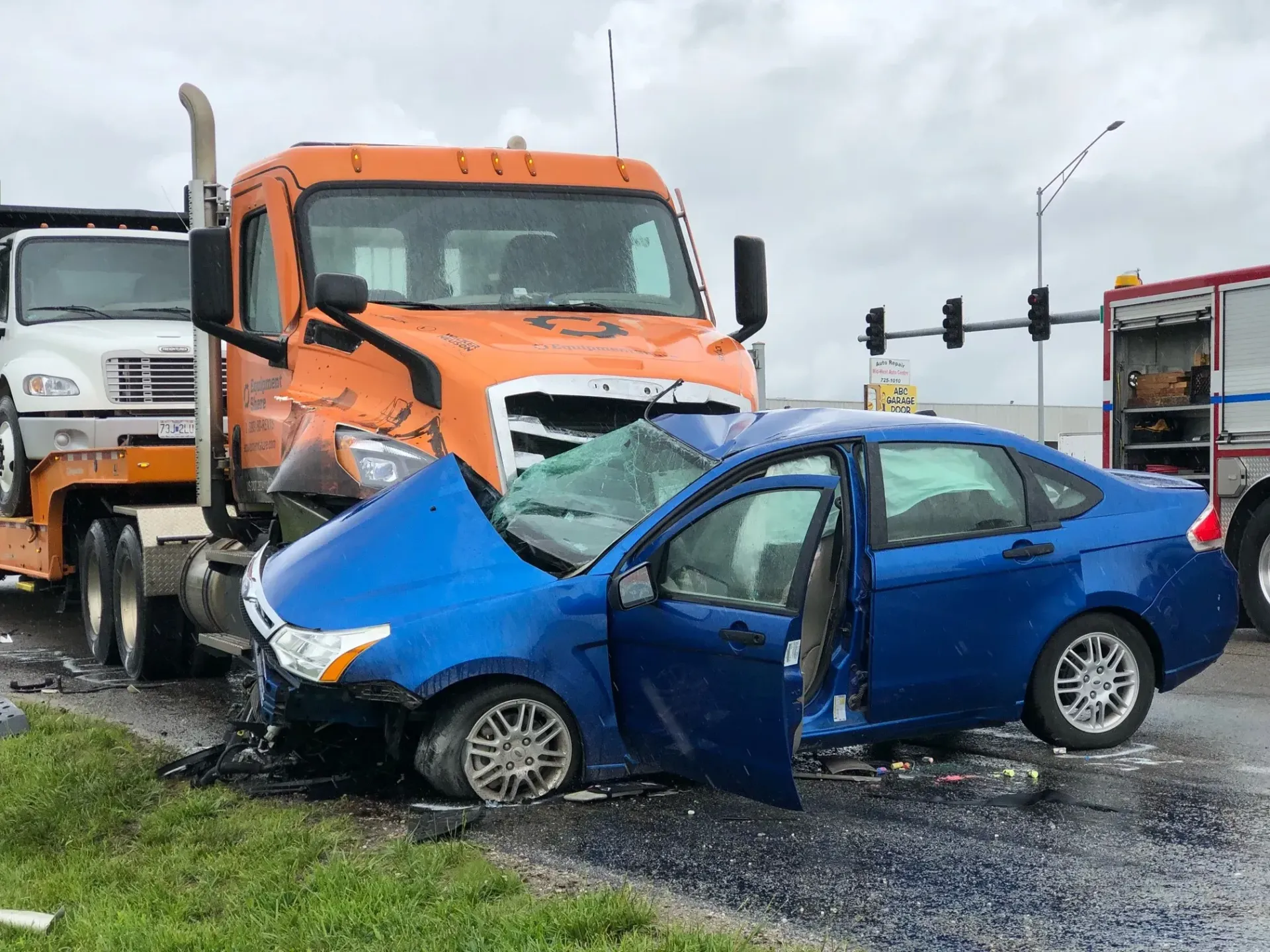
West Virginia is a beautiful state with winding roads
that provide amazing views of the state's natural beauty. However, these
same roads can also be dangerous, especially for drivers who are not
paying attention or driving recklessly. Car accidents are a common
occurrence in West Virginia, and they can result in serious injuries and
even fatalities.
If
you've been involved in a car accident in West Virginia, you may be
entitled to compensation for your injuries and other damages. However,
navigating the legal system can be daunting, especially if you're
dealing with injuries or other health issues as a result of the
accident. That's where personal injury law comes in.
Personal
injury law is the legal process of seeking compensation for injuries or
damages caused by the negligence or intentional actions of another
person or entity. In West Virginia, personal injury law applies to car
accidents and other types of accidents, including slip and fall
accidents, medical malpractice, and workplace accidents.
If
you've been involved in a car accident in West Virginia, the first step
is to seek medical attention. Even if you don't think you're injured,
it's important to get checked out by a medical professional. Some
injuries, such as whiplash, may not show symptoms immediately but can be
serious and require medical attention.
Once
you've received medical attention, it's important to contact a personal
injury attorney who specializes in car accidents such as Stapleton Law. The attorneys at Stapleton Law can help
you navigate the legal system and ensure that your rights are protected.
They can also help you gather evidence, such as police reports, witness
statements, and medical records, to build a strong case.
In
West Virginia, there are several factors that can impact your ability
to file a personal injury claim for a car accident. These include the
statute of limitations, which is the time limit for filing a claim, and
the state's comparative negligence law, which can impact the amount of
compensation you're entitled to receive.
West
Virginia's comparative negligence law means that if you're partially at
fault for the accident, your compensation may be reduced. For example,
if you were speeding at the time of the accident, you may be deemed
partially at fault and your compensation may be reduced accordingly.
If
you're involved in a car accident in West Virginia, it's important to
know your rights and seek legal representation as soon as possible. A
personal injury attorney can help you navigate the legal system and
ensure that you receive the compensation you're entitled to for your
injuries and other damages.
In
conclusion, car accidents can be devastating, but with the help of a
personal injury attorney, you can ensure that your rights are protected
and that you receive the compensation you deserve. If you've been
involved in a car accident in West Virginia, don't hesitate to contact a
personal injury attorney to discuss your legal options. If you have been injured due to someone else's negligence call Stapleton Law today at (304)529-1130.

Can I Still Have a Car Accident Claim If My Injuries Didn't Show Up Right Away?

How Do Insurance Companies Determine What a Car Accident Claim Is Worth in West Virginia, Kentucky, and Ohio?

What You Need to Know After a Truck Accident

Should I Go to the Emergency Room After a Car Accident If I don't Think I'm Seriously Hurt?

What If the Driver Who Hit Me Has No Insurance in West Virginia?
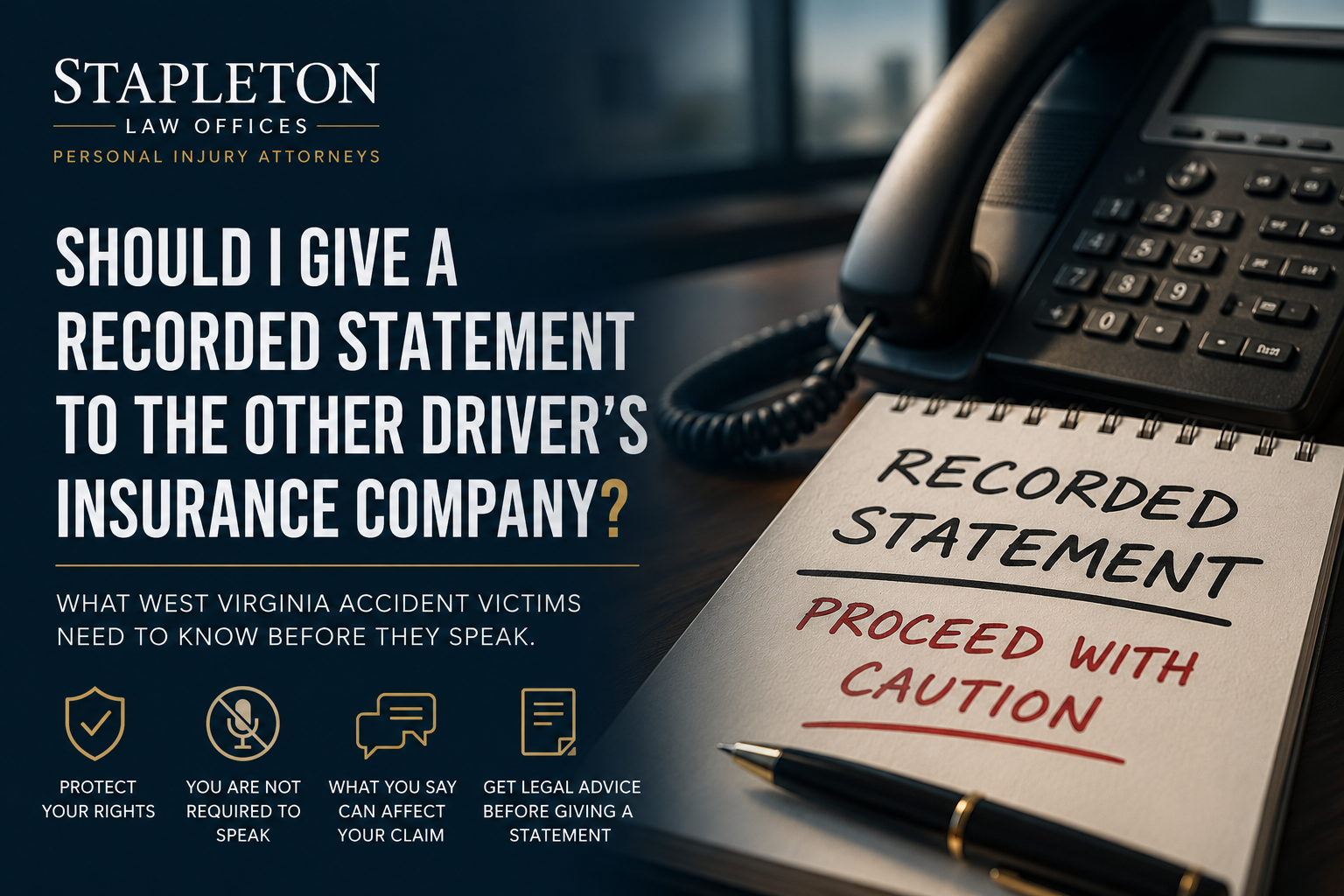
Should I Give a Recorded Statement to the Other Driver's Insurance Company After a West Virginia Car Accident? By Stapleton Law Offices

What Evidence Should I Collect After a Car Accident in West Virginia?

What Is Pain and Suffering Worth After a West Virginia Car Accident?
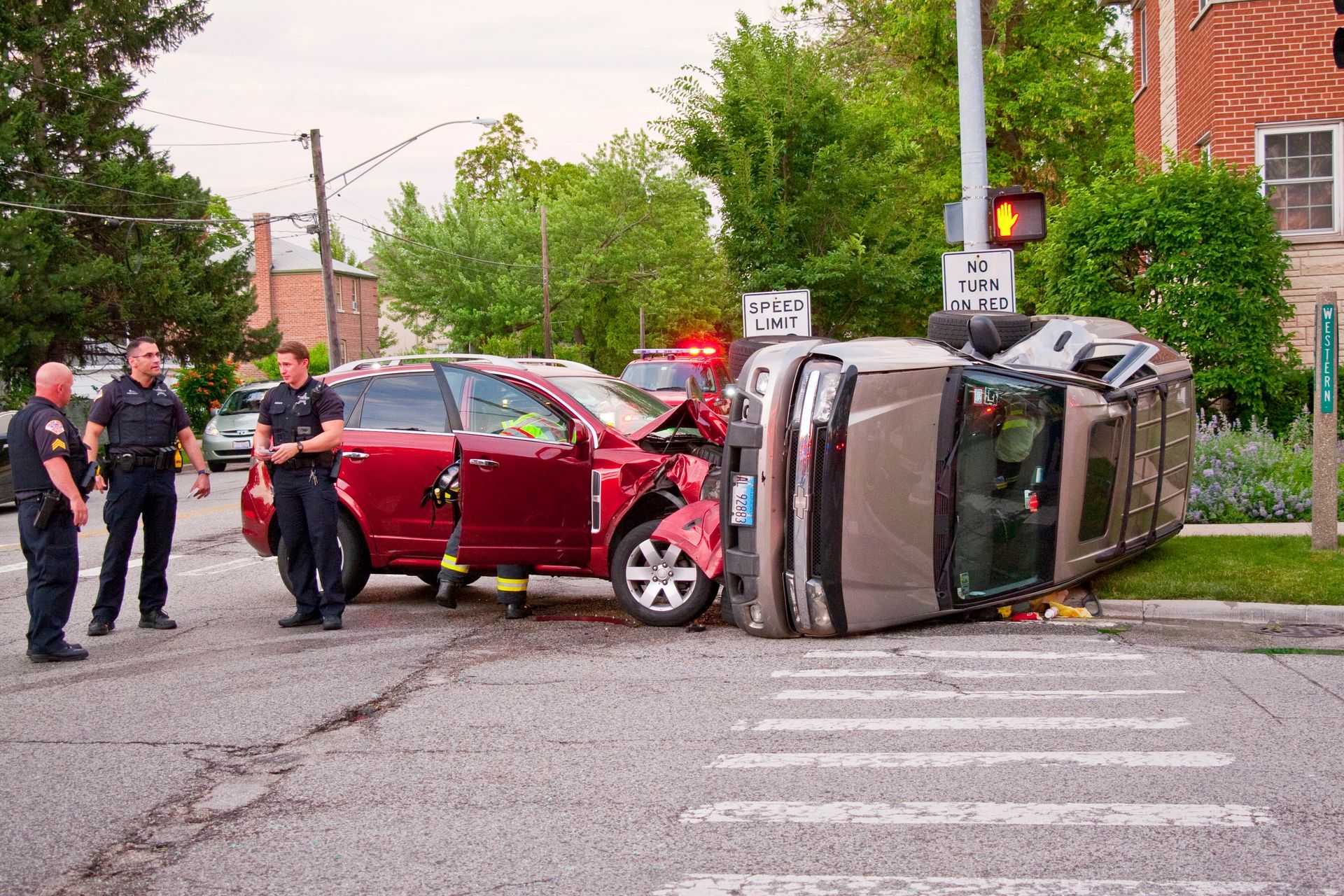
What Should I Do After a Car Wreck around Huntington, West Virginia? By: Matt Stapleton, Stapleton Law Offices Attorney
Should I Settle My Car Wreck Case or Take It to Trial? When you’ve been injured in a car accident, one of the biggest decisions you’ll face is whether to settle your personal injury claim or take it to trial. This choice can affect how much compensation you receive, how long your case takes, and how much stress you experience along the way. Understanding the key factors behind this decision can help you make a more informed choice. Key Factors That Influence the Decision 1. Strength of the Evidence The strength of your evidence plays a major role in whether a case settles or goes to trial. If liability is clear and supported by strong evidence—such as police reports, medical records, and witness testimony—the chances of reaching a favorable settlement increase. However, if fault is disputed or the evidence is less convincing, the insurance company may be less willing to offer fair compensation, making trial a more viable option. 2. Potential Compensation (Damages) The value of your claim is another critical factor. When damages are substantial—such as serious injuries, long-term medical care, or lost income—insurance companies may choose to settle to avoid the risk of a larger jury verdict. On the other hand, if the insurer believes your claim is worth less than you’re demanding, they may push toward trial. 3. Time and Cost Considerations Trials take time—and they can be expensive. Litigation often involves expert witnesses, depositions, and court costs that add up quickly. It can also take months or even years to reach a verdict. For many people, settling offers a faster and less stressful path to compensation. Benefits of Settling Your Case Certainty and Control A settlement provides a guaranteed outcome. You and your attorney can negotiate terms that work for you, rather than leaving the decision in the hands of a jury. Faster Resolution Settling allows you to receive compensation sooner, helping you pay medical bills and move forward with your life without prolonged legal uncertainty. When Going to Trial May Make Sense Seeking Accountability Some individuals want their day in court. A trial can provide a sense of justice and hold the responsible party publicly accountable. Potential for Higher Compensation While settlements are predictable, trials carry the possibility of higher awards. In some cases, juries may award significant damages—especially if the defendant’s conduct was particularly serious. Final Thoughts There’s no one-size-fits-all answer to whether you should settle your car accident case or take it to trial. Every case is different, and the right decision depends on the specific facts, the strength of the evidence, and your personal goals. An experienced personal injury attorney can help you evaluate your options, weigh the risks, and choose the path that best protects your interests. Contact Stapleton Law Today If you or a loved one has been injured due to someone else’s negligence and you’re unsure what to do next, the team at Stapleton Law is here to help. Call (304) 529-1130 or email Contact@Stapleton-Law.com today to schedule your free, no-obligation consultation and learn more about your rights and options.